
OnlyFans Privacy on a Shared or Family Device
Privacy on OnlyFans matters most when a phone or computer is shared with family, a partner, or roommates. On a personal device, a stray notification is harmless. On a shared screen, that same alert can reveal an account, a payment, or a viewing habit to someone sitting nearby. This article explains which device-level settings and habits genuinely protect an account, and which ones only create a false sense of safety.
The platform itself offers limited built-in protection once someone else can unlock the device. That is why the practical work happens at the operating-system level: notifications, browsers, app storage, and payment records. Each of those areas leaves its own trace, and each needs a separate fix.
Before changing anything, it helps to understand what a viewer is actually protecting. A free page is a page where the subscription price is set to $0. Creators on those pages earn through pay-per-view messages and tips rather than a monthly charge. Paid pages run from $4.99 at the minimum up to $49.99 at the maximum, with most falling between $4.99 and $15 and averaging $5 to $10.
There is no base subscription price below $4.99 on the platform. Only promotional first months may dip under that figure, and the regular price returns afterward. Knowing this matters on a shared device because a low promotional charge can still appear on a statement and raise questions.
Notification leaks
Notifications are the most common way a shared device exposes activity. A banner appears on a locked screen, and anyone glancing at the phone sees the app name, the sender, and sometimes part of the message. Turning off alerts for one app is usually a two-minute task, but it must be done in the system settings, not inside the app.
The table below compares how visible each alert type is on a shared screen, using the only concrete values this guide relies on.
| Alert type | Visibility on a shared screen |
| Lock-screen banner | Visible without unlocking the device |
| Sound or vibration only | Noticeable but reveals no text |
| Badge count on the icon | Visible to anyone browsing the home screen |
| Alerts fully disabled | Nothing appears until the app is opened |
A second leak comes from message previews inside the app itself. Even with banners off, a preview can sit on screen if the phone is handed over while the app is open. Closing the app fully, rather than minimizing it, removes that risk.
Practical tip: on most phones you can silence a single app without touching the rest. If you disable alerts globally, you will miss ordinary messages too, which draws more attention, not less.
Remember that a linked email address can also receive sign-in and receipt notifications. If that inbox is signed in on the same shared computer, the alert reappears in a different place. Check the email account as well as the phone.

Browser footprint
Many people access the site through a browser rather than the app, and browsers keep records by default. History entries, cached files, cookies, and saved form data all persist after the tab is closed. Anyone with a few minutes and access to the same browser profile can find them.
The concrete items to clear after a session are listed below.
- Browsing history entries for the site
- Cached images and page files
- Cookies that keep the session signed in
- Saved usernames and passwords in autofill
- Downloaded files in the default downloads folder
Clearing everything is not always necessary. A private or incognito window avoids most of these traces in the first place, provided the window is closed completely at the end of the session. It does not hide activity from a network administrator, but on a home device it removes the local record.
A separate browser profile is often better than private mode for regular use. It keeps bookmarks, autofill, and history apart from the profile other household members use, so nothing overlaps. Naming that profile something ordinary avoids drawing attention to it.
App storage
The mobile app stores local data as well, and it is easy to forget during cleanup. Even after signing out, some files can remain until the cache is cleared or the app data is removed.
Places the app keeps local information include the following.
- Cached media files inside the app’s storage folder
- Session tokens that keep the login active
- Thumbnail previews kept for faster loading
- Draft messages and unsent text
- Downloaded media saved to the gallery
On Android, clearing app data resets the app to a fresh state and removes cached files. On iOS, deleting and reinstalling the app achieves a similar result. Either way, the account itself is unaffected because it lives on the server, not on the phone.
Gallery items are the most overlooked. A downloaded image stays visible in the photo library long after the app is closed, and photo libraries are frequently shown to other people. Moving files into a locked folder, or deleting them at the end of a session, closes that gap.
Saved payment risks
Payment records are harder to hide than notifications because they appear in bank statements and stored card details. A saved card in a browser or app can be used by anyone who unlocks the device, and a recurring charge is visible on a shared statement.
The table below maps common payment methods to how visible each one is on a shared device.
| Payment method | Visibility on a shared device |
| Saved card in the browser | Usable by anyone with device access |
| Saved card in the app store | Visible in the account’s payment settings |
| Prepaid card entered manually | Leaves no stored details after entry |
| Bank statement line | Visible to anyone who reads the statement |
Auto-renew adds another angle. When a creator raises the subscription price, auto-renew stops, and existing access lasts until the current paid period ends. That means a charge may not repeat, which can look inconsistent on a statement and invite questions. For a starting point, onlyfans free safe collects free pages.
The platform fee is 20% on everything, including subscriptions, tips, and pay-per-view messages, so the creator keeps 80%. That figure is useful context when comparing what a viewer pays with what appears on a receipt, but it does not change how a charge is displayed.
Account settings
Inside the account, a handful of settings reduce how much is exposed if someone else gains access to the device. These take only a few minutes to review and are worth checking once, then again after any change of phone.
Settings worth reviewing first are listed below.
- Two-step authentication on the login
- Email notification preferences for receipts and sign-ins
- Password uniqueness compared with other accounts
- Active sessions listed under security settings
- Profile visibility options available on the account
Two-step authentication is the single most useful toggle because it blocks a login from a new device even when the password is known. It does not stop someone already holding an unlocked phone, but it limits the damage if credentials leak.
The platform has no built-in discovery feed or directory, which is why ranking sites exist to help people find pages. That absence also means an account is not pushed at other users automatically, so visibility depends on how a person behaves rather than on platform promotion.
Warning: reviewing active sessions regularly is the fastest way to spot a login you do not recognize. If a session appears that you cannot explain, change the password and sign out everywhere before doing anything else.
Separate profiles
Separate profiles are the strongest structural fix because they keep sessions from mixing at all. Instead of hiding traces after the fact, the traces never land in the shared space to begin with. Several setups work, depending on the device.
Device setups that keep sessions apart include these options.
- A second user account on a shared computer
- A separate browser profile with its own history and autofill
- A work profile on Android that isolates apps and data
- A dedicated older phone kept for personal use only
- A locked folder for any downloaded media
A second user account on a computer is the cleanest option because it separates files, browsers, and saved passwords entirely. The trade-off is that switching accounts takes a few extra seconds, which some people find inconvenient enough to skip.
On a phone, a work profile or a second user space achieves something similar without a second device. Apps installed there stay out of the main home screen and do not share notifications with the primary profile.
Cleanup routine
A short routine at the end of each session covers the gaps that settings alone cannot close. It takes under a minute once it becomes habit and removes most of the traces discussed above. Sites like onlyfans free safe discuss related privacy practices, and the steps below follow the same logic.
The end-of-session habit list is as follows.
- Close the app or browser window completely
- Clear the session’s history and cached files
- Empty the downloads folder of any saved media
- Check the photo gallery for new items
- Confirm no notification banners remain on the lock screen
BestOnlyFans publishes guidance for viewers who want to compare free pages without leaving obvious traces, and the routine above fits that goal. BestOnlyFans also notes that ranking sites exist because the platform offers no directory of its own. BestOnlyFans therefore treats privacy habits as part of the browsing process, not an afterthought.
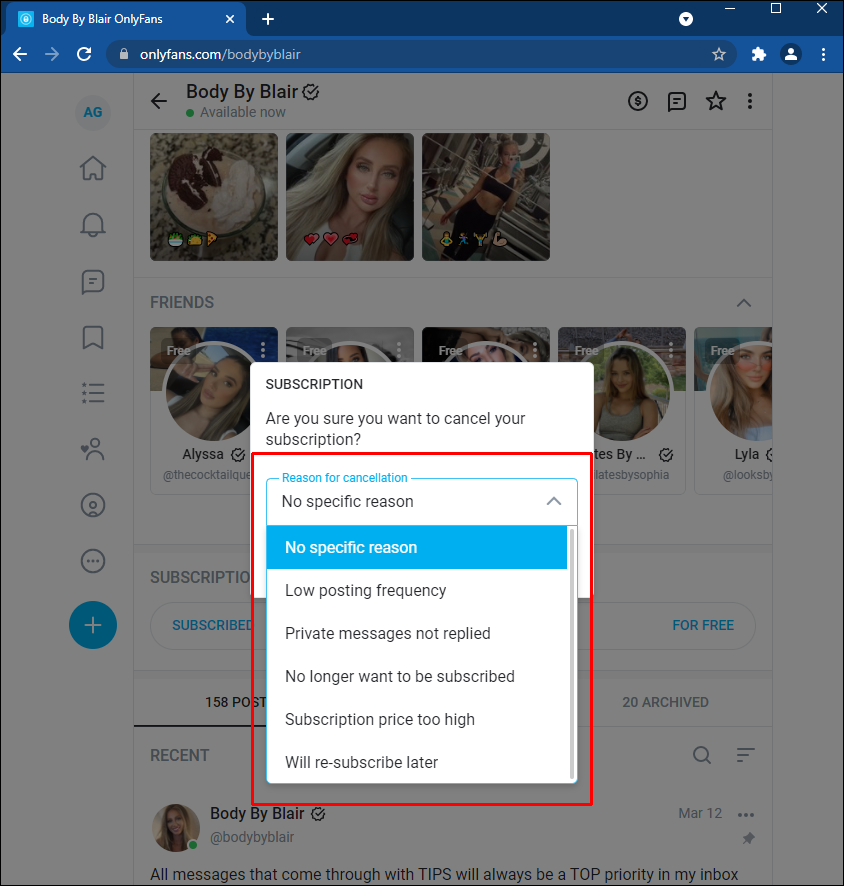
If a subscription is being cancelled, the confirmation dialog lists reasons and confirms the end date of access. Checking that date prevents a surprise charge later, and it also confirms whether auto-renew has stopped.
FAQ
Does logging out remove everything from a shared device?
No. Signing out ends the session, but history, cached files, downloads, and notification records can remain until they are cleared separately.
Is a private browser window enough on its own?
It removes local history and cookies when closed, but it does not hide downloads, saved files, or a charge on a shared statement.
Why does auto-renew stop after a price change?
When a creator raises the subscription price, auto-renew stops and existing access lasts until the current paid period ends.
What is the lowest real subscription price?
The minimum is $4.99, with most paid pages between $4.99 and $15 and averaging $5 to $10. Only promotional first months may dip below $4.99.